Extensibility is the precondition
Every product is already being graded on whether a user's agent can add to it.
I wanted to see everything listening on my machine without running ss and reading the output, and to kill any of it from the top bar, so I said that in one sentence and a minute later it was there.
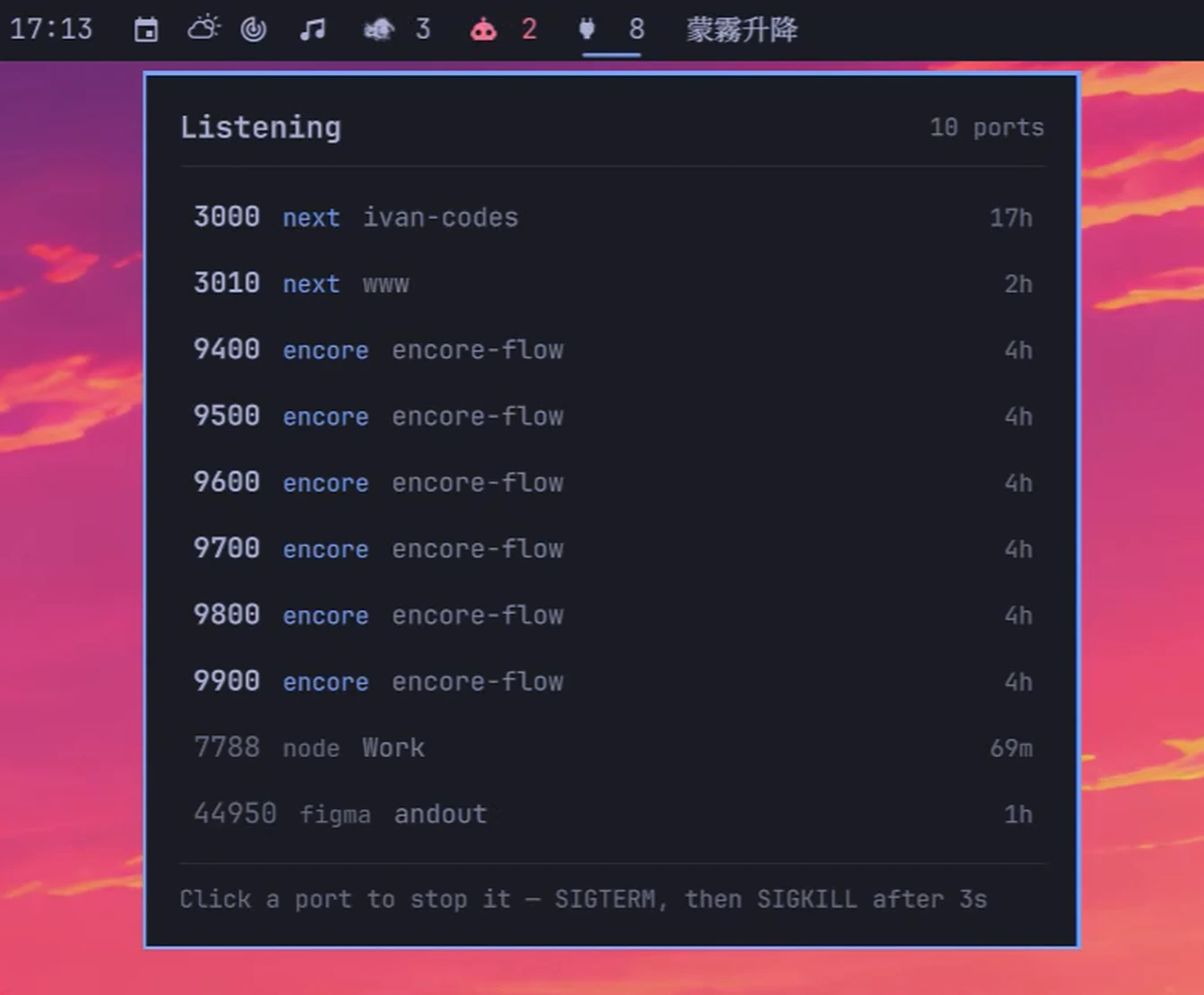
I used the dev servers example because it was the closest one to hand. In the few days since giving Omarchy a go I have also had it build me a Sonos remote in the bar and a panel for Encore's CI.
One sentence is enough because putting something in the bar on Omarchy, like most things on Linux, means a folder with two files and a line of config. On macOS the same thing is an Xcode project plus $99 a year to Apple before anybody else can run it without a security warning, on Windows an MSIX-packaged app, so a minute of description turns into a weekend of packaging and it never gets made.
The only non-OS product I experienced this with is Raycast, where an extension is TypeScript that Raycast builds and loads for me, and a script command is a shell script in a folder I point it at, the same arrangement one level up from the OS.
For fifteen years the software worth shipping was software for millions of people, so everything grew a store, a review queue and a signing key to make that scale work. People now build what they need on the day they notice they need it, and whatever sits between the description and a running tool ends up being skipped, and so does any product that insists on it.
PS. This post came out of the same agent conversation as the widget: it screenshotted what it had just built, then drafted the writeup while I argued with it about the wording.
